Demographic Characteristics
Brief
US Census Snapshots 2020: Same-Sex Couples
September 2025
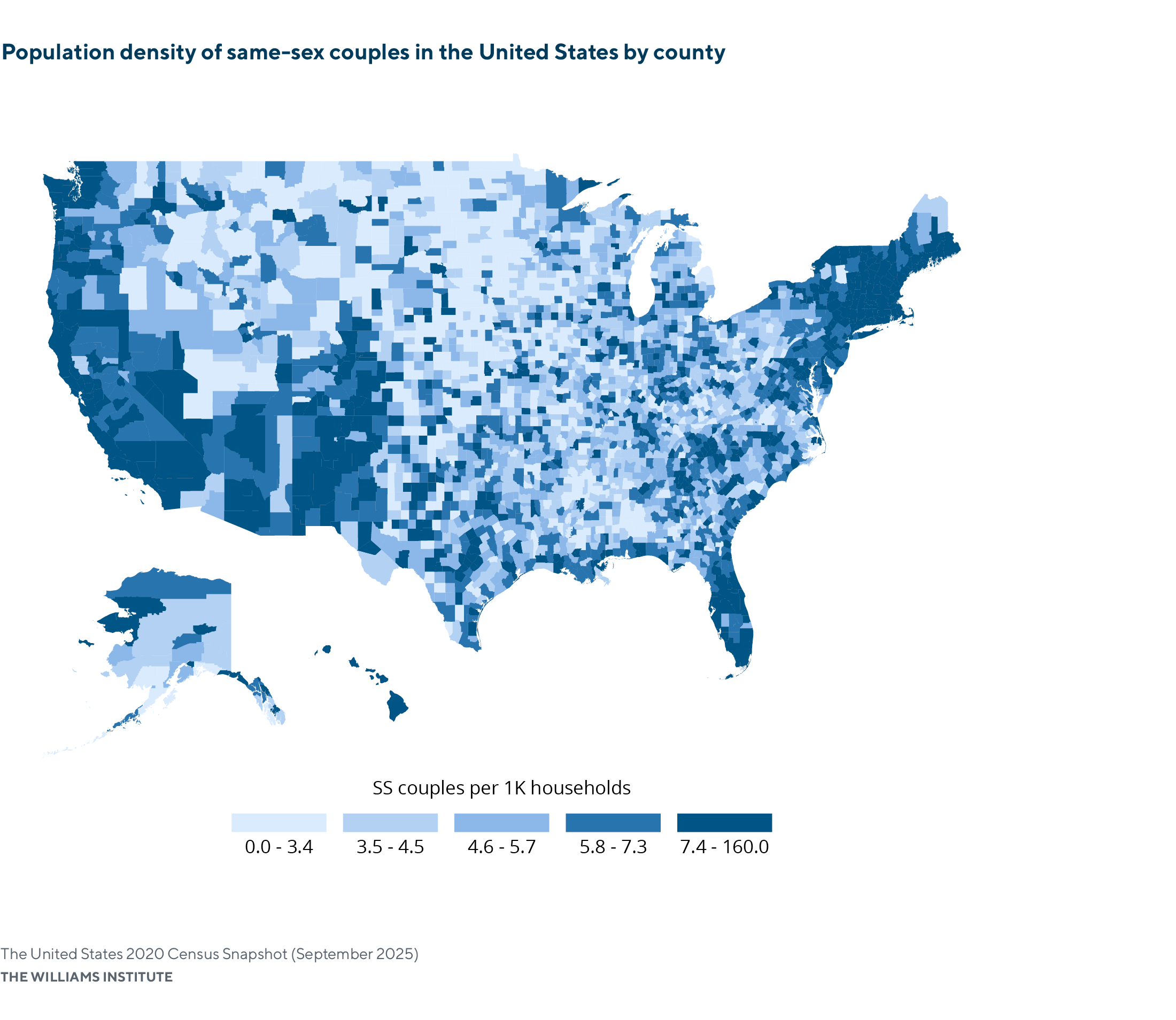
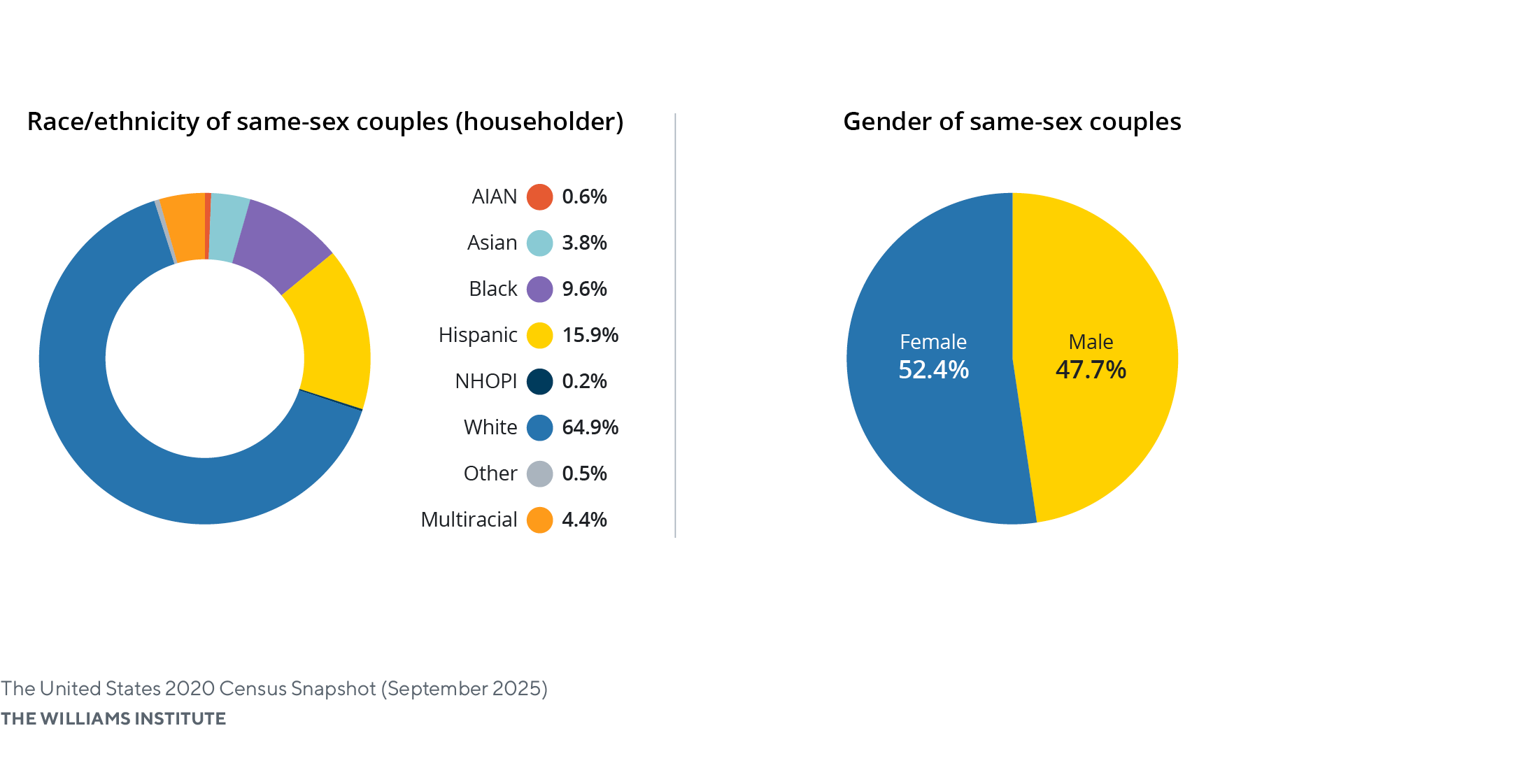
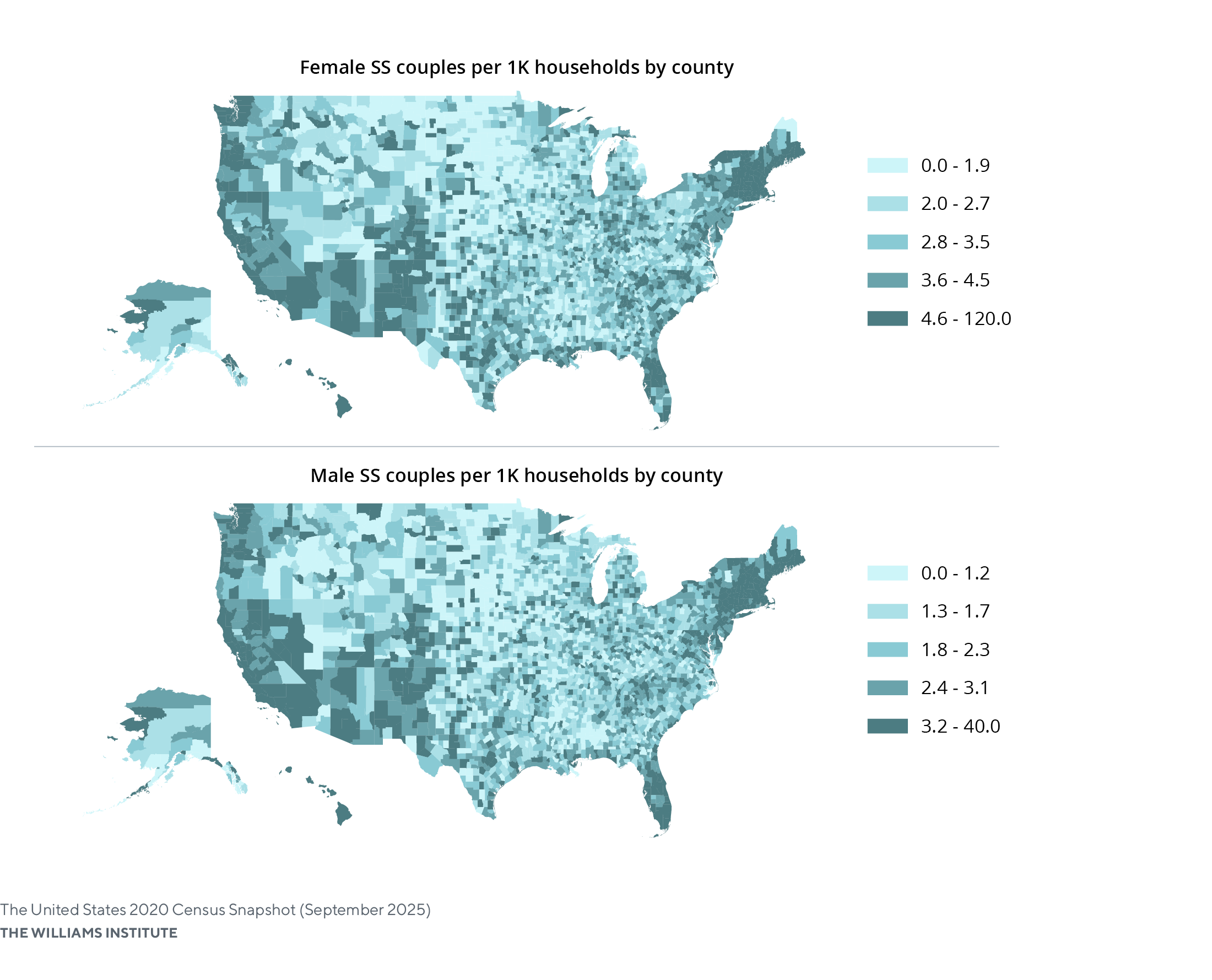
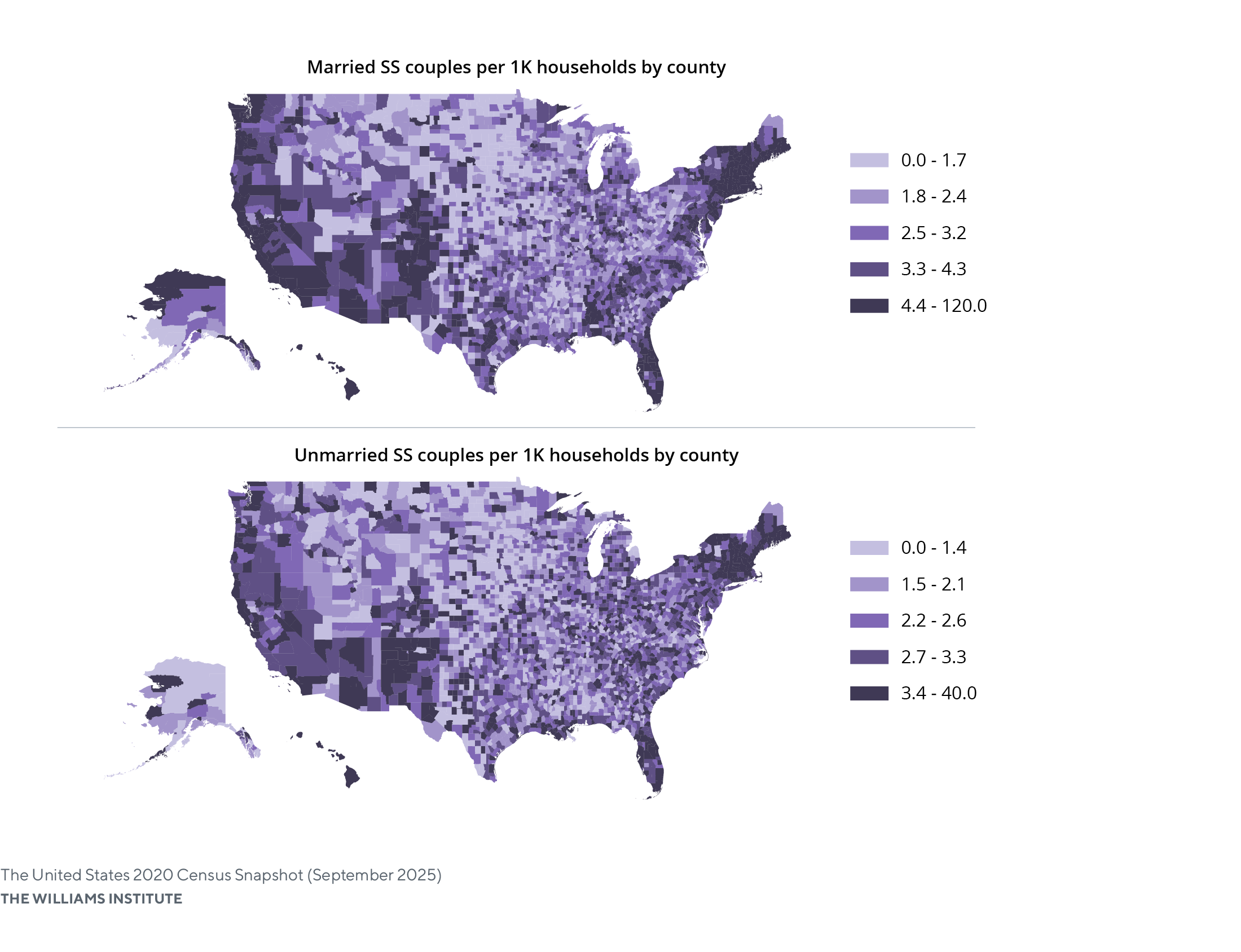
This brief analyzes data from the 2020 Census to provide demographic information about cohabitating same-sex couples in the U.S. The brief focuses on the gender, race/ethnicity, and relationship status of same-sex couples at both the national and state levels. The findings are also available through a data interactive tool that offers information at the national, state, and county levels.
Highlights
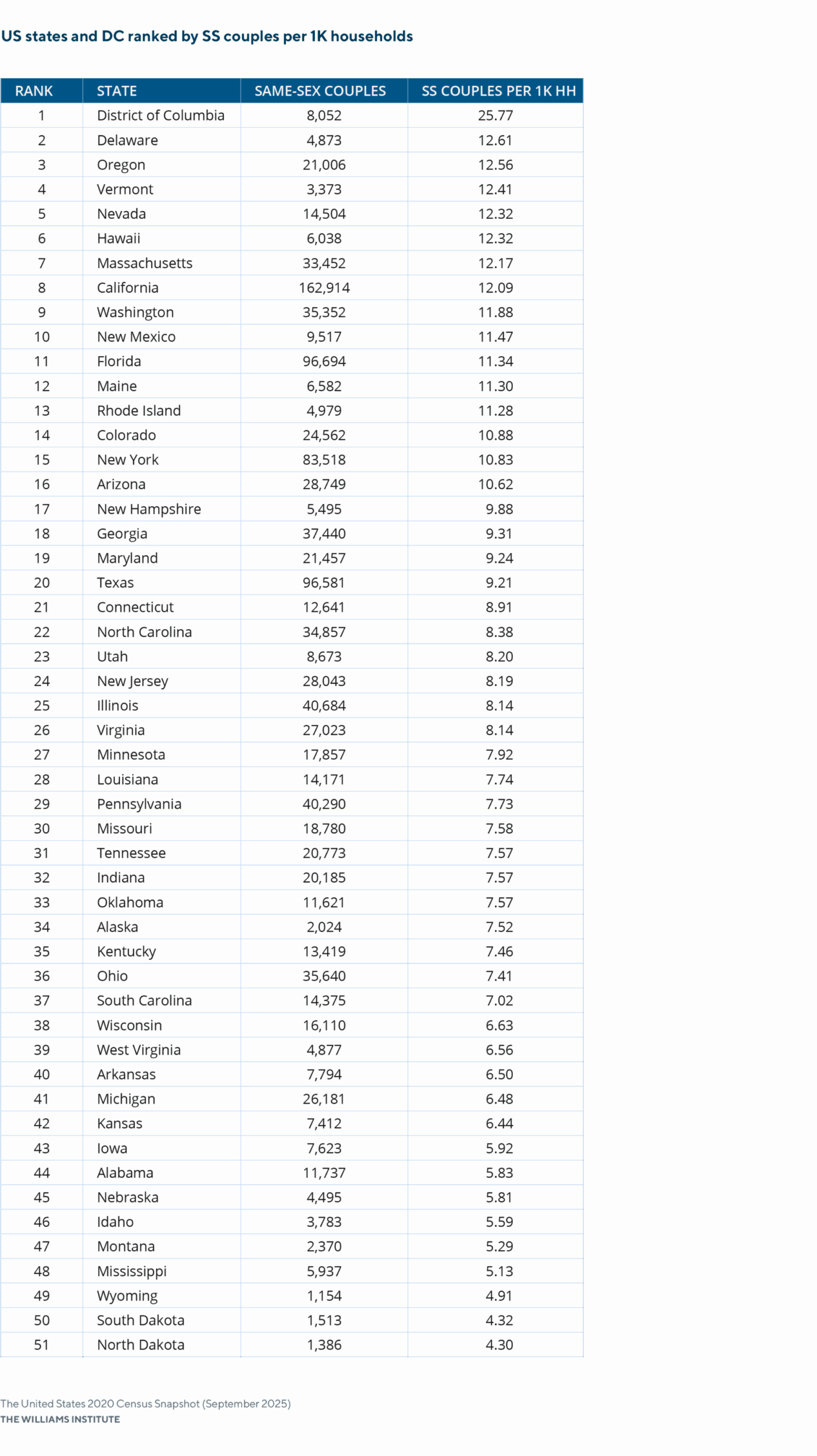
Washington, D.C. had the highest concentration of cohabitating same-sex couples.
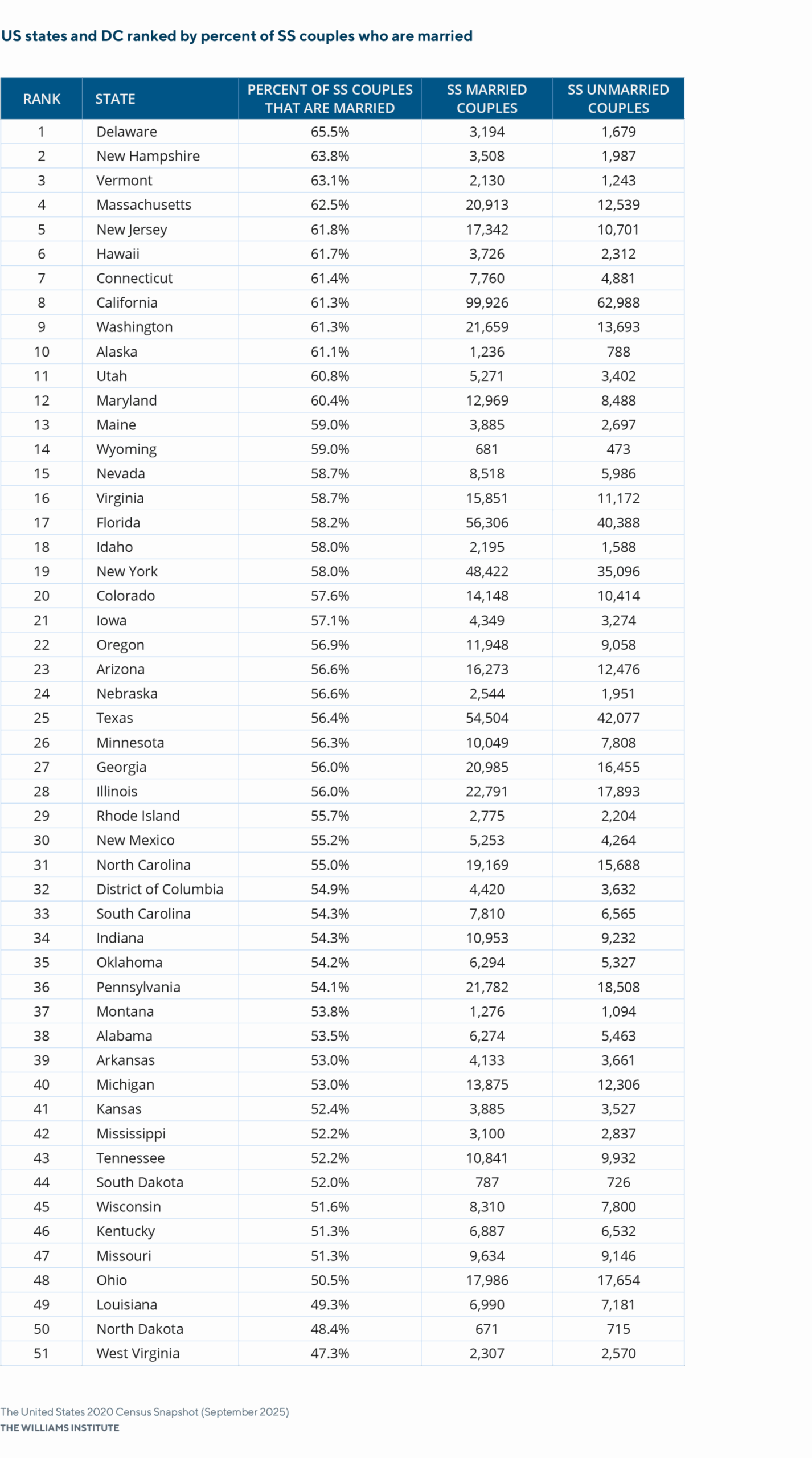
Over half of cohabitating same-sex couples in nearly every state were married.
Among states, Vermont had the highest proportion of female same-sex couples and New York had the least.
Data Points
Brief
Family Characteristics


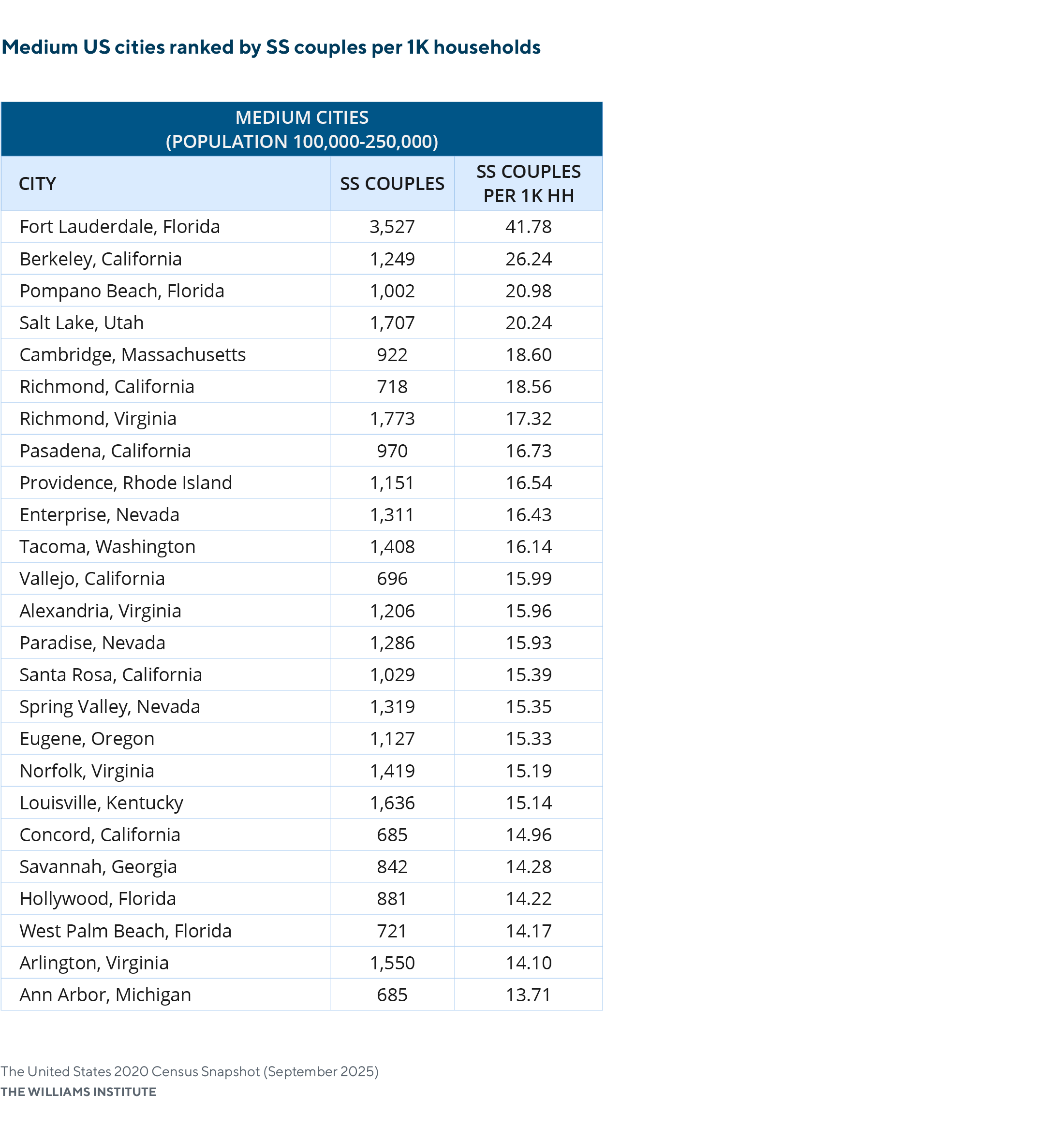
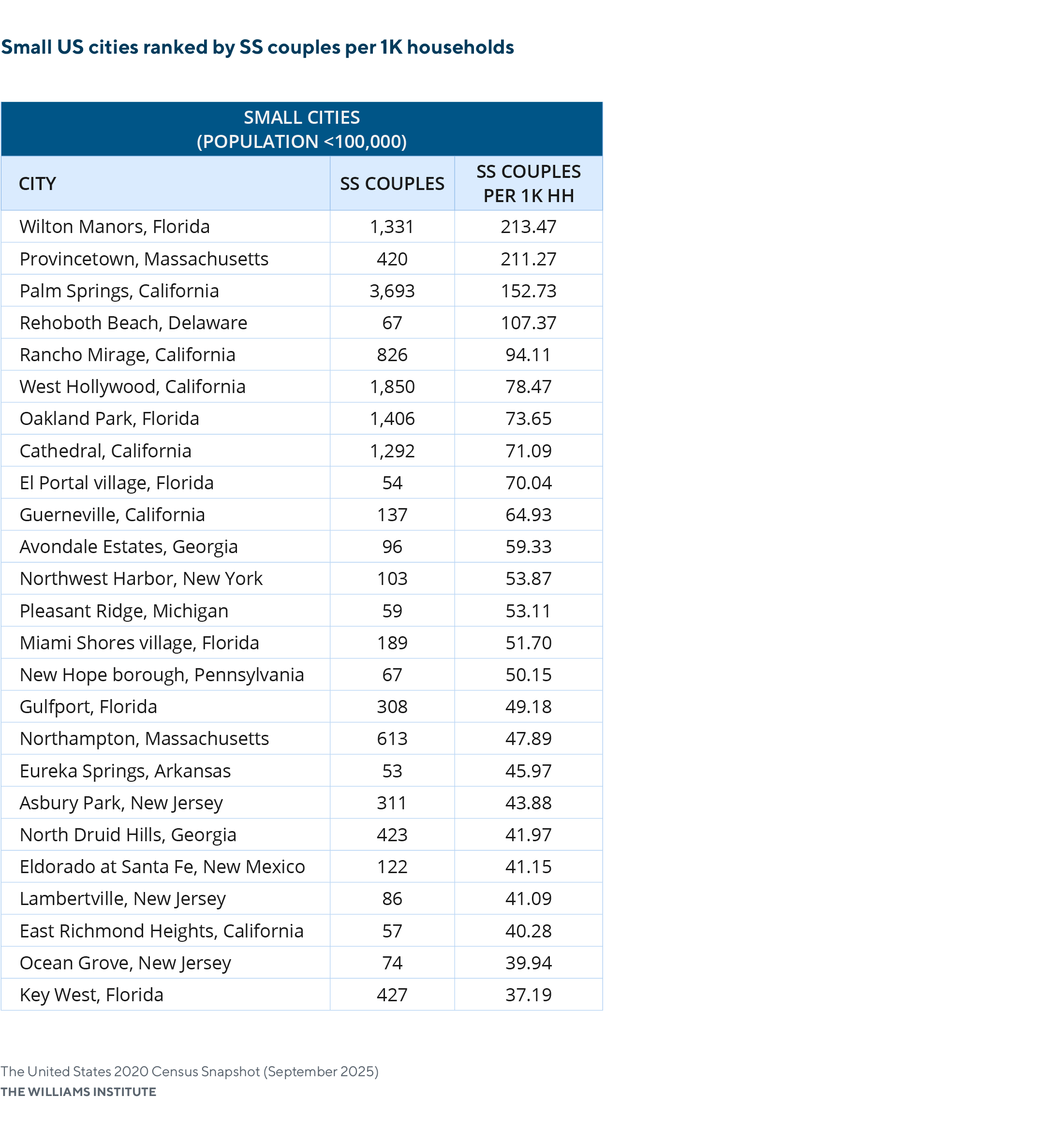
Methodology
Data was compiled using the US Census Bureau’s state, county, city, and Census tract counts for same-sex couples found here. In this analysis, the authors combined incorporated places, independent cities, and consolidated cities to create the “city” category. Geographies listed as “independent cities” (such as Richmond City, VA) are included in both the “county” and “city” designation in this analysis. “Independent cities” are cities that are outside the jurisdiction of any county and are recognized as “county equivalents” by the U.S. Census Bureau. They are assigned a Federal Information Processing Series (FIPS) code. Despite their equivalence to counties, they are also still recognized as cities (as they often have comparable populations to cities of similar geographic size). Independent cities are only located in Virginia, Maryland, Nevada, and Missouri. The householder is the person, or one of the people, who primarily own or rent the house. Same-sex couples are identified in households where householder describes their relationship with another adult of the same sex as either a “husband/wife” or “unmarried partner.” In addition, we utilized the 2020 Census Privacy Protected Microdata Files (PPMF) to identify the race/ethnicity of the householder and the presence of the householder’s own child/children. For our full methodology note, see here.
Census Snapshots are also available for each state, D.C., and Puerto Rico:
Census Snapshot: Massachusetts
Census Snapshot: New Hampshire
Census Snapshot: North Carolina
Census Snapshot: South Carolina