Executive Summary
Using a survey of 1,902 LGBTQ adults in the workforce conducted in the summer of 2023, this brief examines the extent to which LGBTQ employees worked for employers that participated in Pride Month activities and took other publicly visible, affirmative actions to support LGBTQ communities throughout the year, including providing financial support to LGBTQ organizations and causes, taking supportive public positions on LGBTQ policy issues, and visibly including LGBTQ people in their advertising.
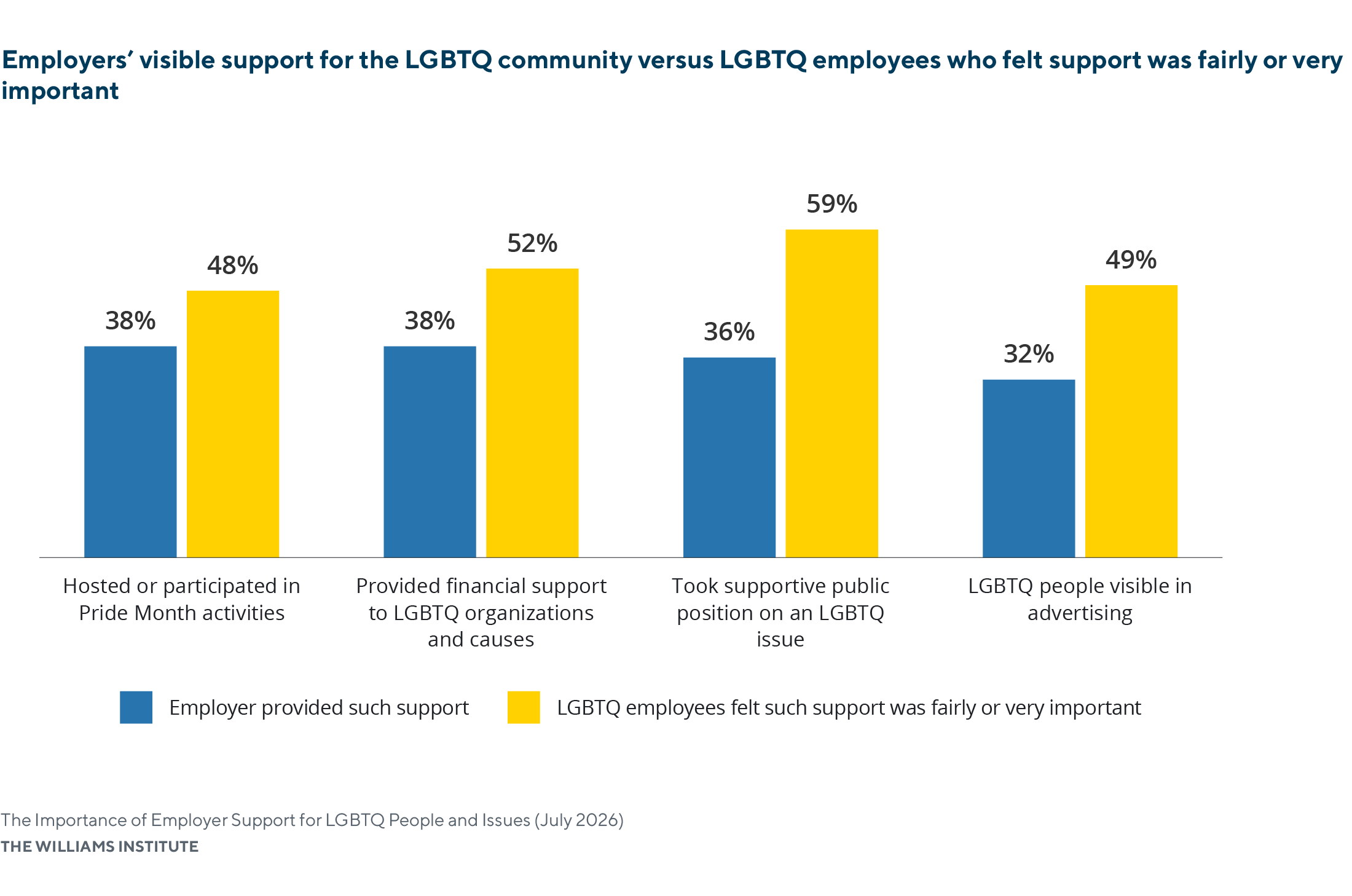
Overall, we find that more LGBTQ employees felt these forms of support were important to them than those who reported that their employers had shown such support. For example, while 38% of LGBTQ employees reported that their employer participated in Pride Month activities, 48% felt it was fairly or very important for their employer to participate. Further, an even greater percentage indicated that it was fairly or very important to them that their employers publicly support LGBTQ issues (59%); similar percentages indicated that it was fairly or very important to them that their employers provide financial support to LGBTQ organizations and causes (52%) and visibly include LGBTQ people in their advertising (49%). This demonstrates that LGBTQ employees are looking for more substantive forms of support that extend beyond participation in Pride Month activities. While over half of LGBTQ employees felt these actions were important to them, a little more than one-third said their employers publicly support LGBTQ issues (36%) or provide financial support to LGBTQ organizations and issues (38%).
LGBTQ-supportive actions were related to job satisfaction. Over 90% of LGBTQ employees whose employers had taken visible supportive actions reported being satisfied with their current job, compared with less than three-fourths of those whose employers had not. For example, 94% of LGBTQ employees whose employers had provided financial support to LGBTQ organizations and causes reported being satisfied with their current job, while only 68% of those whose employers had not reported being satisfied with their current job.
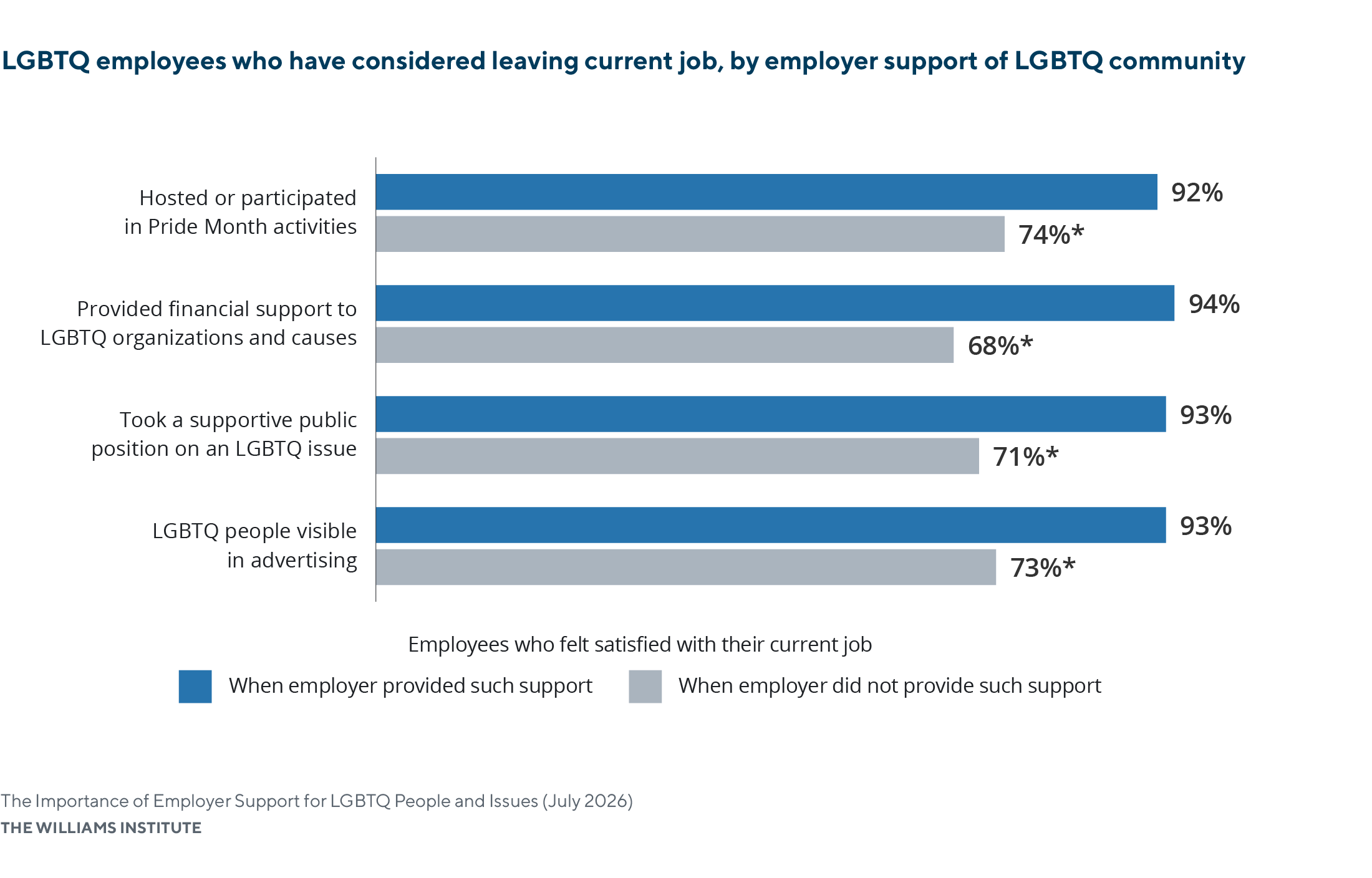
Note: *p-value less than 0.05 when compared to LGBTQ employees whose employers provided such support.
LGBTQ employees whose employers had not taken visible supportive actions were approximately twice as likely to report having considered leaving their current job as those whose employers had taken such actions. For example, 25% of LGBTQ employees whose employers did not provide financial support to LGBTQ organizations and causes reported they had considered leaving their job, compared with only 11% whose employers had provided such support.
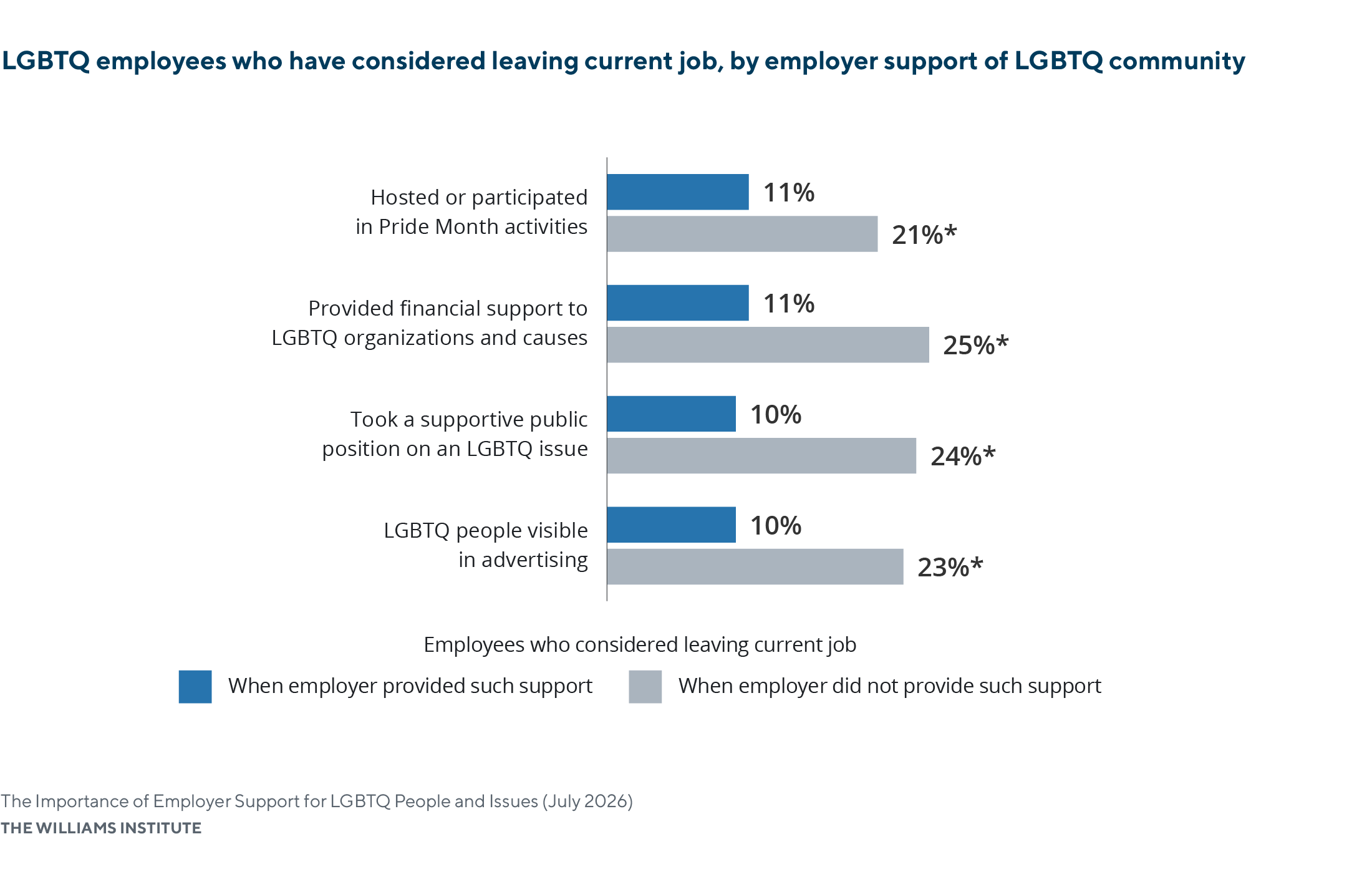
Note: *p-value less than 0.05 when compared to LGBTQ employees whose employers provided such support.
LGBTQ employees with lower incomes were less likely to report that their employers engaged in visible support of LGBTQ communities. For example, only 35% of those earning less than $50,000 a year reported that their employers engaged in Pride Month activities, compared with 47% of those earning more than $100,000. However, employees with lower incomes were also less likely to feel that their employer’s participation in such activities was fairly or very important to them.
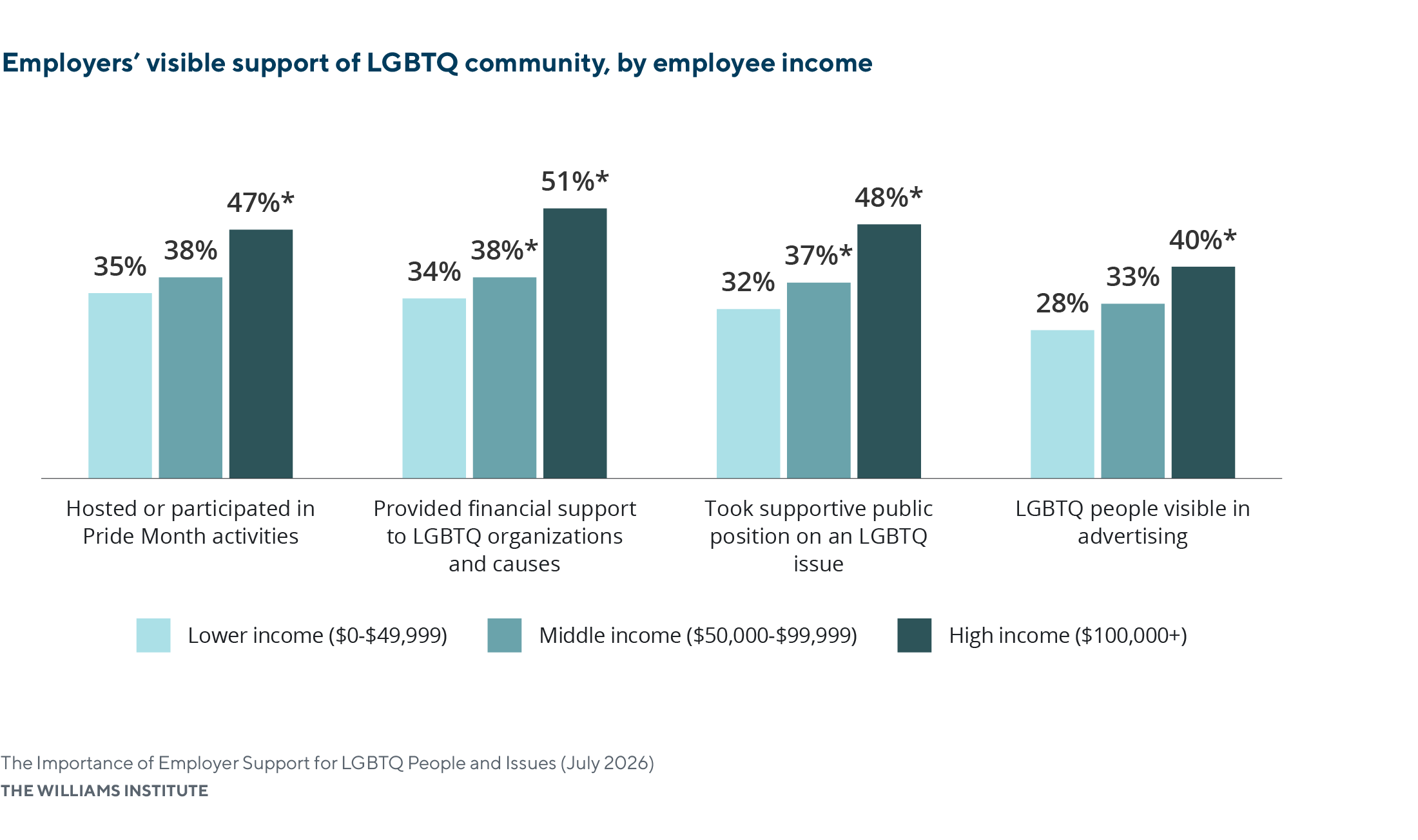
Note: *p-value less than 0.05 when compared to lower-income LGBTQ employees
LGBTQ employees whose employers took visible supportive actions were more likely to report being out as LGBTQ to their supervisor than those whose employers had not. Approximately two-thirds of LGBTQ employees whose employers had shown visible support for LGBTQ communities reported being out to their supervisor, compared with less than half of LGBTQ employees whose employers had not shown such support. For instance, among those whose employers visibly included LGBTQ people in their advertising, 68% of LGBTQ employees were out to their supervisor, compared with only 43% of those whose employers did not.
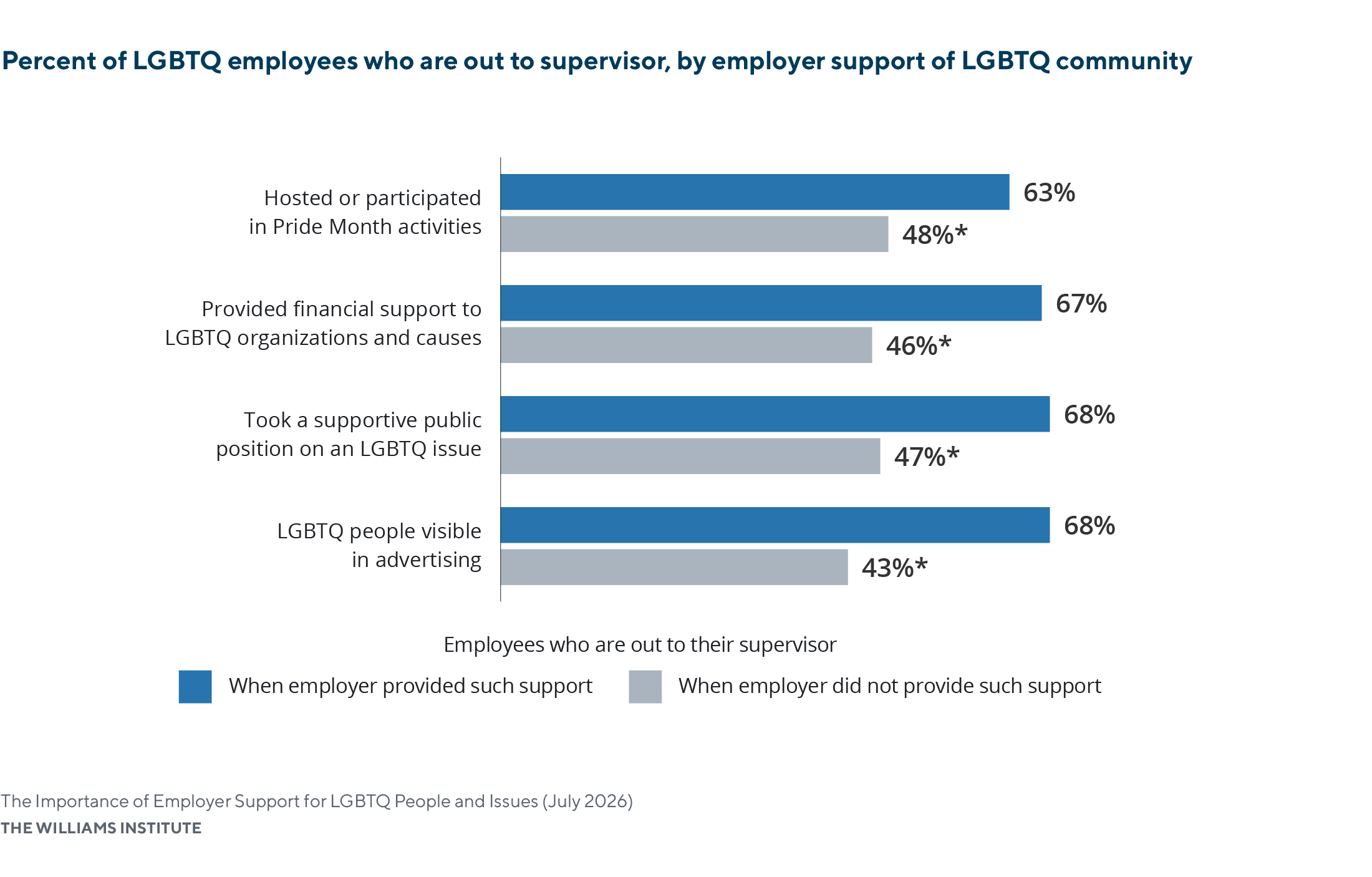
Note: *p-value less than 0.05 when compared to satisfaction when employers provided such support.
Younger LGBTQ employees (ages 18 to 34) were more likely to feel that these forms of visible support were fairly or very important to them than LGBTQ employees who were older (ages 45 and older)—in particular, for employers to take supportive public positions on LGBTQ issues (63% vs. 52%) and provide financial support to LGBTQ organizations (56% vs. 44%).
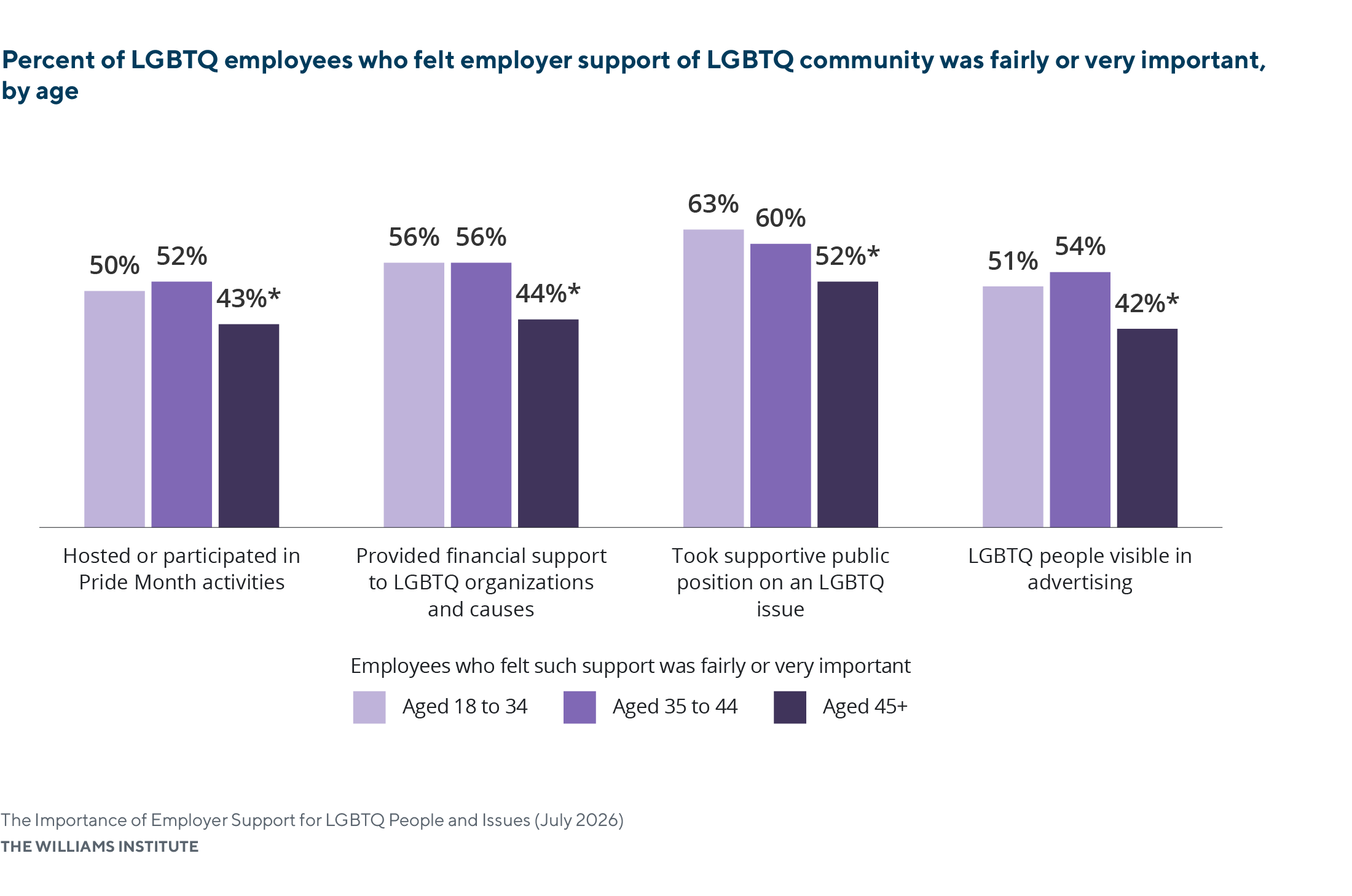
Note: *p-value less than 0.05 when compared to LGBTQ employees ages 18-34
Transgender and nonbinary employees (TNB) were more likely to have felt that these forms of visible support were fairly or very important to them than cisgender LGBQ employees—particularly, for employers to take supportive positions on LGBTQ issues (68% vs. 58%) and provide financial support to LGBTQ organizations (60% vs. 51%).
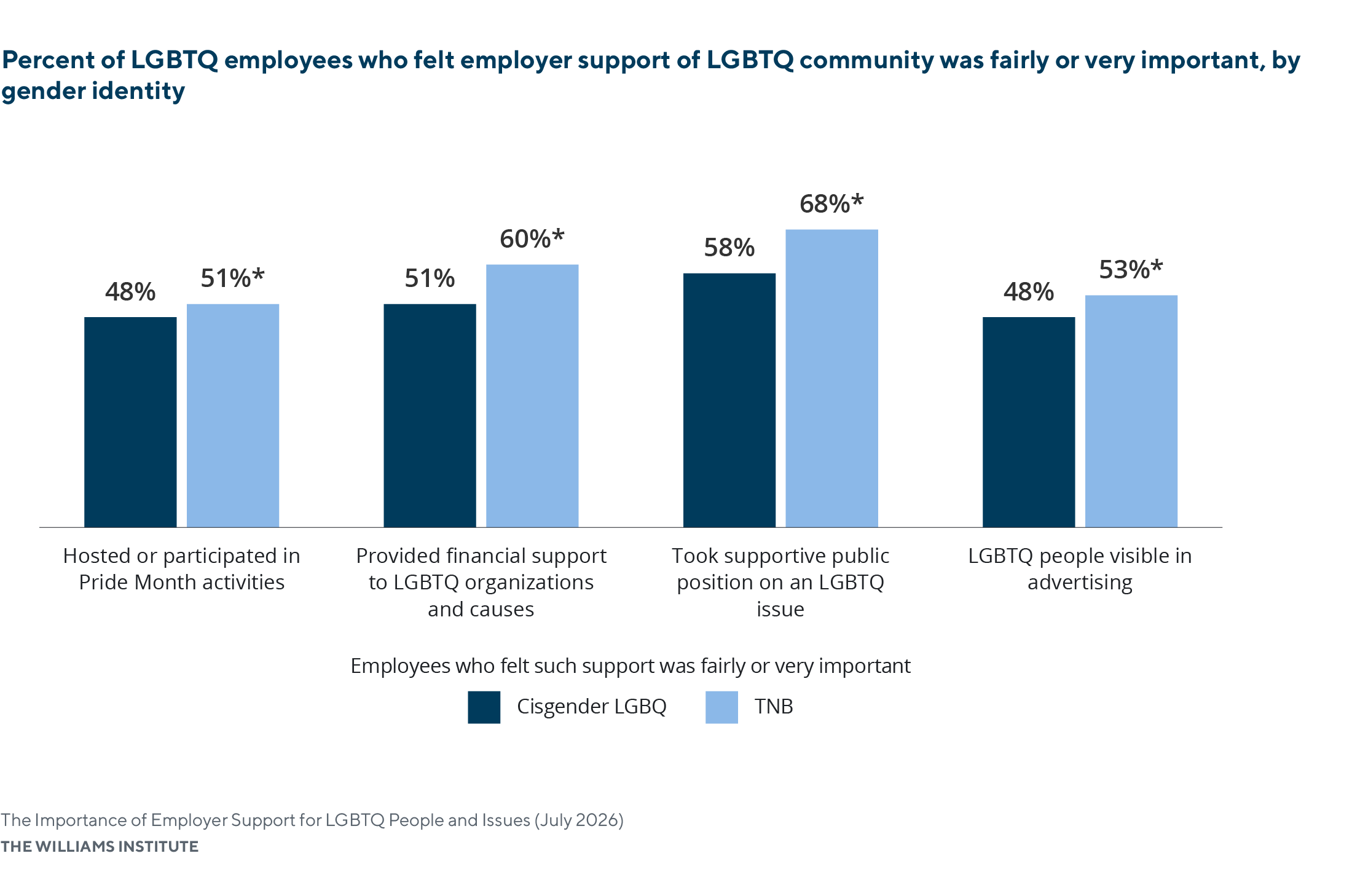
Note: *p-value less than 0.05 when compared to cisgender LGBQ employees